3D Porcelain Moose Christmas Ornament Review
As an embroidery designer who spends more time than I care to admit staring at stitch density charts and testing thread tension, I approach every new digital asset with a mix of skepticism and hope. The holiday season is approaching, which means my inbox is flooding with requests for festive custom apparel, boutique merchandise, and personalized gifts. This is the time when a machine embroidery design needs to do more than just look pretty in a preview window; it needs to translate flawlessly into thread, stabilize properly on fabric, and hold up to the wear and tear of real life.
I recently evaluated the 3D Porcelain Moose Christmas Ornament, a graphic asset categorized under Illustrations and Graphics, specifically designed for digital use but often sought after by crafters looking to create tangible products. My goal was to determine if this design has the structural integrity and visual charm required for serious commercial embroidery projects, or if it remains strictly a decorative element for screens and printable mockups. Here is my practical breakdown of how this design performs when moved from a PNG file to the hoop.
First Impressions: Mood and Visual Personality
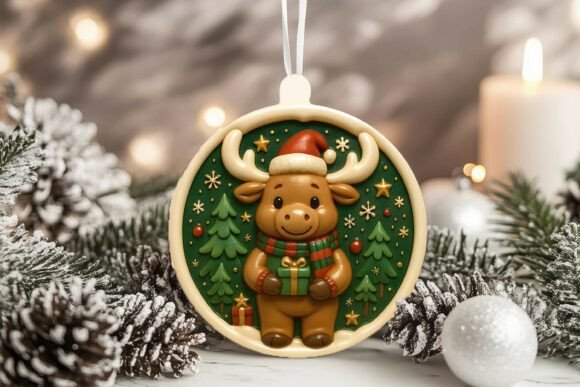
The moment you load the 3D Porcelain Moose Christmas Ornament into your digitizing software, the mood is immediately established. It captures that specific, cozy nostalgia of a winter cabin—think warm wool socks, crackling fires, and snow-dusted pine trees. The moose itself is rendered with a "porcelain" aesthetic, giving it a glossy, delicate appearance that contrasts nicely with the rugged nature of the animal. This juxtaposition is smart design work; it feels premium and gift-worthy rather than cartoonish.
For Etsy sellers and small shop product creators, this visual personality is gold. It suggests a high-end boutique feel. When I imagine this design stitched onto a cream-colored canvas tote bag or a soft fleece baby onesie, it doesn’t look like a mass-produced sticker slapped on fabric. It looks intentional. The circular ornament layout provides a contained focal point, which is crucial for embroidery project planning because it naturally defines the boundary of your stitching area without requiring excessive negative space management.
Real-World Application: Where This Design Shines
I put this design through its paces mentally (and virtually) across several common handmade product categories. Here is where I see the highest potential for success:
- Holiday Apparel and Sweatshirts: The 3D Porcelain Moose Christmas Ornament works exceptionally well as a chest-sized accent on crewneck sweatshirts. The circle shape allows for clean placement above the heart or centered on the back. Because the design has a distinct outline, it reads clearly even from a distance, which is vital for custom apparel meant to be worn at parties or gatherings.
- Baby and Nursery Decor: There is something inherently sweet about a moose in a Christmas setting. For baby embroidery, this design translates beautifully onto burp cloths, bibs, or small throw blankets. The "porcelain" theme lends itself to softer color palettes—creams, pale blues, and muted reds—which are currently trending in nursery decor. It creates a sense of tradition and warmth that parents love for personalized gift items.
- Kitchen and Home Goods: Tea towels and aprons are staple items for craft business owners. Placing this ornament design near the hem of a linen tea towel or centered on the bib of a denim apron adds a touch of seasonal flair. The design’s clean lines ensure it doesn’t get lost in the weave of heavier fabrics like canvas or duck cloth.
- Patches and Pins: If you are creating embroidered patches for jackets or bags, the circular format of the 3D Porcelain Moose Christmas Ornament is ideal. It mimics the look of a classic enamel pin or a woven label, making it versatile for both functional and decorative uses.
Technical Considerations and Stitching Clarity
While the visual appeal is strong, the true test for any digital embroidery file is how it stitches. Since this is originally a PNG illustration, the transition to thread requires careful digitizing choices. The "porcelain" effect relies heavily on smooth gradients and highlights. In embroidery, we achieve this through precise satin stitch work for outlines and dense fill stitch areas for the body.
When evaluating the detail level, designers must pay attention to the antlers and facial features. If the digitizer attempts to replicate every tiny highlight from the original illustration using running stitch or fine satin details, the result may become cluttered or fragile. My advice is to simplify the inner details slightly to maintain structural integrity. A clean, bold outline with a solid or lightly textured fill will often look more professional than an overly complex attempt to mimic a 3D render. This ensures the stitch density remains balanced, preventing puckering on lighter fabrics.
Thread color selection is paramount here. To capture the "porcelain" look, consider using white or ivory threads with subtle shading, perhaps accented with a metallic gold or silver thread for the ribbon or bells if included in the design elements. Contrast is key; on dark fabrics, the design might lose some of its delicate charm unless bright, reflective threads are used.
Where to Use With Caution
No design is perfect for every application. There are specific scenarios where the 3D Porcelain Moose Christmas Ornament might struggle:
- Small Hoop Sizes: If you are working with very small hoops (under 4x4 inches), intricate details may become muddy. Ensure the final stitched size is large enough for the eye to distinguish the moose’s features.
- Textured or Stretchy Fabrics: Avoid placing this design on highly textured fabrics like chunky knits or stretchy jersey unless you use a heavy-duty stabilizer. The smooth lines of the porcelain style can distort on uneven surfaces.
- Dense Stitch Areas: Be mindful of the total thread count. If the design includes a large fill area, it may become stiff and uncomfortable against the skin, particularly on baby clothes or intimate apparel.
- Frequent Washing: For items like kitchen towels or aprons that undergo frequent laundering, ensure the design is anchored well. Loose ends or high-density areas can fray over time if not finished correctly.
Practical Designer Notes for Success
Before committing this design to a production run, I recommend following these steps to guarantee a professional outcome:
- Test on Scrap Fabric: Always run a test stitch on the actual fabric you plan to use. This helps you assess how the fabric texture interacts with the thread and whether adjustments to tension or stabilizer are needed.
- Check Thread Color Contrast: Hold your thread spools up to the fabric. The contrast between the thread and the material will dictate the legibility of the design. Low contrast can make the moose disappear.
- Inspect Small Details: Zoom in on the digitized version. Are the eyes clear? Is the mouth defined? If details are too small, they will vanish in the final product.
- Confirm Licensing: As a designer, you must verify the commercial usage rights of the 3D Porcelain Moose Christmas Ornament. Even if you purchase the digital asset, ensure you are allowed to sell physical items made from it. Check the license terms carefully before listing on Etsy or other marketplaces.
- Use Proper Stabilizer: The choice of stabilizer (cut-away vs. tear-away) depends on the fabric weight. For stable fabrics like cotton canvas, tear-away may suffice, but for anything prone to stretching, a cut-away stabilizer is safer.
In conclusion, the 3D Porcelain Moose Christmas Ornament is a charming, versatile asset that brings a touch of rustic elegance to holiday collections. It is best suited for projects where a clean, focused graphic is desired, such as tote bags, sweatshirts, and nursery items. By paying attention to stitch density, thread choice, and fabric compatibility, you can transform this digital illustration into a stunning finished product that customers will love. It’s a solid addition to any graphics library aimed at creating memorable, handmade holiday memories.