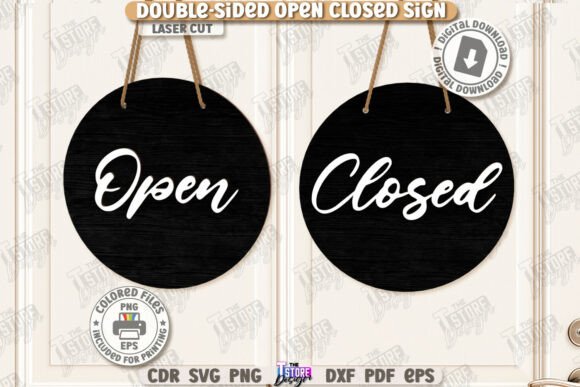
Double-Sided Open Closed Sign Laser Cut
I have spent the last decade navigating the ever-shifting landscape of digital product creation. From early days of selling simple SVGs on Etsy to managing complex design bundles on Creative Fabrica, I have learned that not every asset is created equal. Some files are just shapes; others are foundational elements that can elevate an entire brand collection. Recently, I evaluated a specific asset titled Double-Sided Open Closed Sign Laser Cut, and it sparked a real conversation about how niche-specific graphics can drive sales in commercial product creation.
This isn't just another generic icon. It is a graphic design asset with clear utility for brick-and-mortar aesthetics, small business branding, and decorative home goods. Below, I break down my experience testing this file across various product lines, from print-on-demand merchandise to digital downloads.
First Impressions and Niche Appeal
When you first open a file described as a "3D Laser Business Sign CNC File," you expect technical precision. The description notes: "RED line – CUT BLACK line – ENGRAVE Jus". This instruction set immediately signals that this is a laser cutting oriented design, likely intended for wood, acrylic, or MDF. However, for us digital sellers, the appeal lies in its visual personality.
The design strikes a balance between rustic charm and professional clarity. It feels handmade yet polished. For the modern entrepreneur, this aesthetic bridges two massive markets: the farmhouse/decor niche and the hospitality/small business niche. It appeals to coffee shop owners, boutique retailers, and homeowners who love that "open for business" vibe. The double-sided nature implies versatility, suggesting that the design works well when viewed from multiple angles—a feature that translates beautifully into 3D mockups and layered digital art.
Real-World Testing: Building a Product Collection
To determine if this asset was worth integrating into my shop, I didn't just upload it. I treated it like a new inventory item. I tested it across three distinct product categories to see where it fit best.
1. Laser Cutting and CNC Digital Files
Since the source file includes cut and engrave lines, it is perfect for creators who sell ready-to-cut files. I verified the vector paths to ensure the SVG design was clean. For laser enthusiasts, this is a high-value asset. It allows them to create physical signage without designing from scratch. If you sell on platforms like Etsy or Creative Fabrica, offering a bundle that includes variations (e.g., "Open," "Closed," "Out to Lunch") increases the perceived value of the digital download.
2. Print-on-Demand Merchandise
I then converted the core graphic into a PNG design with transparency and tested it on apparel. The bold lines of the sign work exceptionally well on tote bags and aprons. Imagine a barista wearing an apron with a subtle, laser-cut style logo of this sign. It reinforces small business branding without being overly loud. I also tested it on mugs, creating a mug design that could be sold as a gift for new business owners. The contrast held up well against both white ceramic and dark matte finishes.
3. Printable Wall Art and Decor
Beyond functional items, this asset has strong potential as printable wall art. By placing the sign graphic within a simulated frame and adding complementary typography, I created a piece that fits perfectly in a home office or a creative studio. This taps into the "work from home" trend, where entrepreneurs want their space to feel professional yet welcoming.
Strategic Use in Product Presentation
In the world of online selling, your listing images are everything. A static image of a sign file doesn't sell itself; you need to show the customer what they can achieve. Here is how I used this asset to improve my product presentation:
- Mockup Previews: I placed the design onto realistic wooden door mockups. Seeing the texture of the wood interacting with the sublimation design or laser engraving helped customers visualize the final product. This visual storytelling builds trust.
- Thumbnail Appeal: For my marketplace listings, I used the sign graphic as the central element of the thumbnail. Its recognizable shape (the classic toggle sign) grabs attention faster than abstract patterns. This directly impacts click-through potential.
- Product Bundles: To increase average order value, I paired this sign with matching Canva templates for social media posts. A bundle that includes "Shop Opening Announcement Graphics" alongside the physical sign file offers a complete solution for a new business owner.
Where It Works Best vs. Where to Be Careful
No single asset is universal. Based on my testing, here is where Double-Sided Open Closed Sign Laser Cut shines and where it might struggle.
Ideal Applications
- Decorative Layouts: It serves as a focal point in scrapbooking kits or digital paper packs.
- Social Media Graphics: Use it for Instagram stories announcing store hours or holiday closures.
- Packaging Design: Include a small version of the sign on thank-you cards included in physical orders.
- Seasonal Collections: Modify the text to read "Happy Holidays" or "Back to School" while keeping the sign structure.
Areas Requiring Caution
However, there are risks. Because the original file is designed for laser cutting, it may contain intricate details that do not translate well to tiny formats.
- Tiny Sticker Details: If you shrink this design too much for a planner sticker, the engraved lines may disappear or become muddy. Always test at actual size.
- Crowded Thumbnails: Avoid placing this graphic next to other busy elements in a listing image. It needs breathing room to maintain its visual hierarchy.
- Low-Resolution Prints: Ensure your exported PNGs are at least 300 DPI. A pixelated sign looks unprofessional and damages your brand identity.
Practical Seller Notes for Implementation
Before you publish any listing featuring this asset, follow these practical steps to ensure quality and compliance:
1. Verify Commercial Licensing: Even if you buy the file, check the terms. Can you sell physical products made from it? Can you resell the digital file itself? Most laser cutting files allow for physical sales but restrict digital resale. Clarify this to avoid account suspensions.
2. Test on Real Mockups: Don't rely solely on digital renders. Print a test copy on cardstock or use a vinyl cutter to see how the lines hold up. This helps you write accurate descriptions for your customers.
3. Font Pairing: When creating accompanying designs, pair the rustic sign with appropriate typography. A serif font adds elegance, while a handwritten font keeps it friendly. Avoid overly techy sans-serif fonts unless you are aiming for a very specific modern look.
4. Organize Your Files: If you are selling this as part of a design bundle, ensure all files are clearly labeled. Separate the SVG, PNG, and JPG versions. Provide a readme file with instructions, especially regarding the cut/engrave lines for laser users.
5. Check Contrast: Preview the design on both light and dark backgrounds. A sign that looks great on white wood might get lost on a black background. Adjust colors or add drop shadows in your editing software to ensure visibility.
Final Verdict
The Double-Sided Open Closed Sign Laser Cut is more than just a clipart image; it is a versatile tool for the serious digital creator. It bridges the gap between physical craftsmanship and digital convenience. For sellers targeting small business owners, decorators, and crafters, this asset offers a reliable way to expand your catalog with high-demand, niche-specific products.
By testing it across mockups, verifying its scalability, and bundling it strategically, you can transform a simple sign graphic into a profitable pillar of your online shop. Just remember: quality control is key. Treat every file as a reflection of your brand, and your customers will reward you with repeat business.