Skeleton Laser Engrave File Review
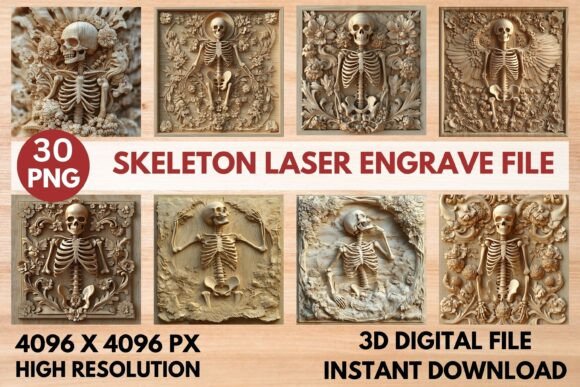
As a designer who spends half my day staring at digitized stitch paths and the other half debating thread colors for client projects, I am always looking for designs that bridge the gap between digital precision and tactile warmth. Recently, I evaluated the Skeleton Laser Engrave File, a graphic asset marketed primarily for laser cutting and engraving but with clear potential for adaptation in mixed-media handmade products. While the file is technically categorized under Laser Engraving and Graphics, its visual weight and structural integrity make it an interesting candidate for embroidery designers who want to add a touch of edgy sophistication to their handmade product lines.
First Impressions: Mood and Visual Personality
The immediate takeaway from the Skeleton Laser Engrave File is its clean, high-contrast aesthetic. Skeleton motifs often risk looking cluttered or overly macabre if not balanced correctly, but this design leans into a stylized, almost architectural interpretation of bone structure. The lines are crisp, suggesting that the source vector or raster image was created with precision in mind. For an embroidery designer, this clarity is vital. It means that when you trace or import this concept into your digitizing software, you have a strong foundation to build upon without fighting against muddy details.
The mood is modern, slightly gothic, but approachable enough for broader markets like custom apparel or boutique home decor. It does not scream "horror movie"; rather, it whispers "vintage anatomy" or "modern minimalist." This versatility is exactly what Etsy sellers and small shop owners need to create items that appeal to a wide range of buyers, from alternative fashion enthusiasts to those who appreciate subtle artistic details on everyday items.
Real-World Application: From Screen to Stitch
To truly understand how a design performs, we have to imagine it in use. Let’s say you are preparing a batch of embroidered patches for a craft fair booth. You choose the skeleton motif because it stands out against denim jackets and canvas tote bags. When I visualize the Skeleton Laser Engrave File translated into thread, I see it working exceptionally well as a central focal point on a heavyweight cotton twill patch. The stark white bones would pop beautifully against a black or navy background, creating a striking contrast that draws the eye immediately.
Consider another scenario: a personalized gift project. A customer wants a custom apron for a barbecue enthusiast who loves unique decor. Applying this design to a heavy-duty canvas apron could transform a mundane kitchen tool into a statement piece. The skeleton theme adds a layer of personality that generic floral patterns simply cannot match. Similarly, for sweatshirt embroidery, placing a smaller, simplified version of the skeleton on the chest pocket area offers a subtle nod to the wearer's style without overwhelming the garment.
The design also lends itself well to home décor. Imagine a set of embroidered tea towels featuring this skeleton graphic paired with simple botanical elements. The juxtaposition of delicate flowers and structured bone lines creates a visually compelling narrative that feels curated and professional. This kind of thoughtful composition increases the perceived value of the finished product, allowing you to price your items higher based on the quality of the design integration.
Where Caution Is Required
While the design has strong potential, there are specific situations where it requires careful handling. Embroidery is a three-dimensional medium, and flat graphics can sometimes lose their impact if not digitized with appropriate stitch types.
- Small Hoop Sizes: If you attempt to stitch this design in a very small hoop (such as 4x4 inches), the fine details of the skeleton may become indistinct. Tiny gaps between bones might fill in with fill stitch density, turning the intricate lines into a solid blob. Always test the scale before committing to production.
- Textured Fabrics: Using this design on highly textured fabrics like bouclé wool or thick chenille can obscure the clean lines of the skeleton. The fabric's nap can hide the definition of the bones, resulting in a muddied look. Stick to smooth, tight-weave fabrics like cotton, linen, or denim for the best results.
- Stretchy Fabrics: For caps or stretchy knit shirts, ensure you use a proper stabilizer to prevent puckering. If the fabric distorts during stitching, the geometric precision of the skeleton will warp, ruining the professional finish.
- Dense Stitch Areas: Avoid over-stitching the interior of the bones. If you use too much stitch density, the fabric underneath can become stiff and uncomfortable, especially on wearable items like custom apparel.
Design Notes for the Practical Designer
Before incorporating the Skeleton Laser Engrave File into your commercial workflow, there are several technical checks you should perform. First, always test the design on scrap fabric using the same thread colors and stabilizer you plan to use for the final product. This step reveals potential issues with thread tension or color contrast that might not be visible on screen.
Inspect the small details closely. Are the joints and ends of the bones distinct? If the original file is a PNG, ensure it has sufficient resolution so that when you trace it for digitizing, you don’t introduce jagged edges. Converting a raster image to a vector path before digitizing is often a wise move to maintain line integrity.
Consider the thread colors carefully. While white thread on dark fabric is a classic choice, experimenting with metallic threads or contrasting colors can elevate the design. However, keep in mind that metallic threads can be harder to work with and may require adjusted machine settings. Also, review the design in black and white mockups to ensure that the shapes remain recognizable even if color perception varies.
Finally, confirm the licensing terms. Although the file is described as a premium graphic, verify whether it allows for commercial use in finished goods. Many digital embroidery file creators have different rules for physical sales versus digital resale. Protect your business by ensuring you have the right to sell products made with this design.
Conclusion
The Skeleton Laser Engrave File offers a versatile, high-quality visual asset that can significantly enhance a designer’s portfolio. Its clean lines and modern aesthetic make it suitable for a wide range of applications, from embroidered patches to holiday embroidery gifts. By paying attention to fabric selection, stitch density, and proper stabilization, designers can transform this graphic into a stunning finished product that resonates with customers. For craft business owners looking to add a unique edge to their offerings, this design provides a solid foundation for creative exploration and profitable merchandise.